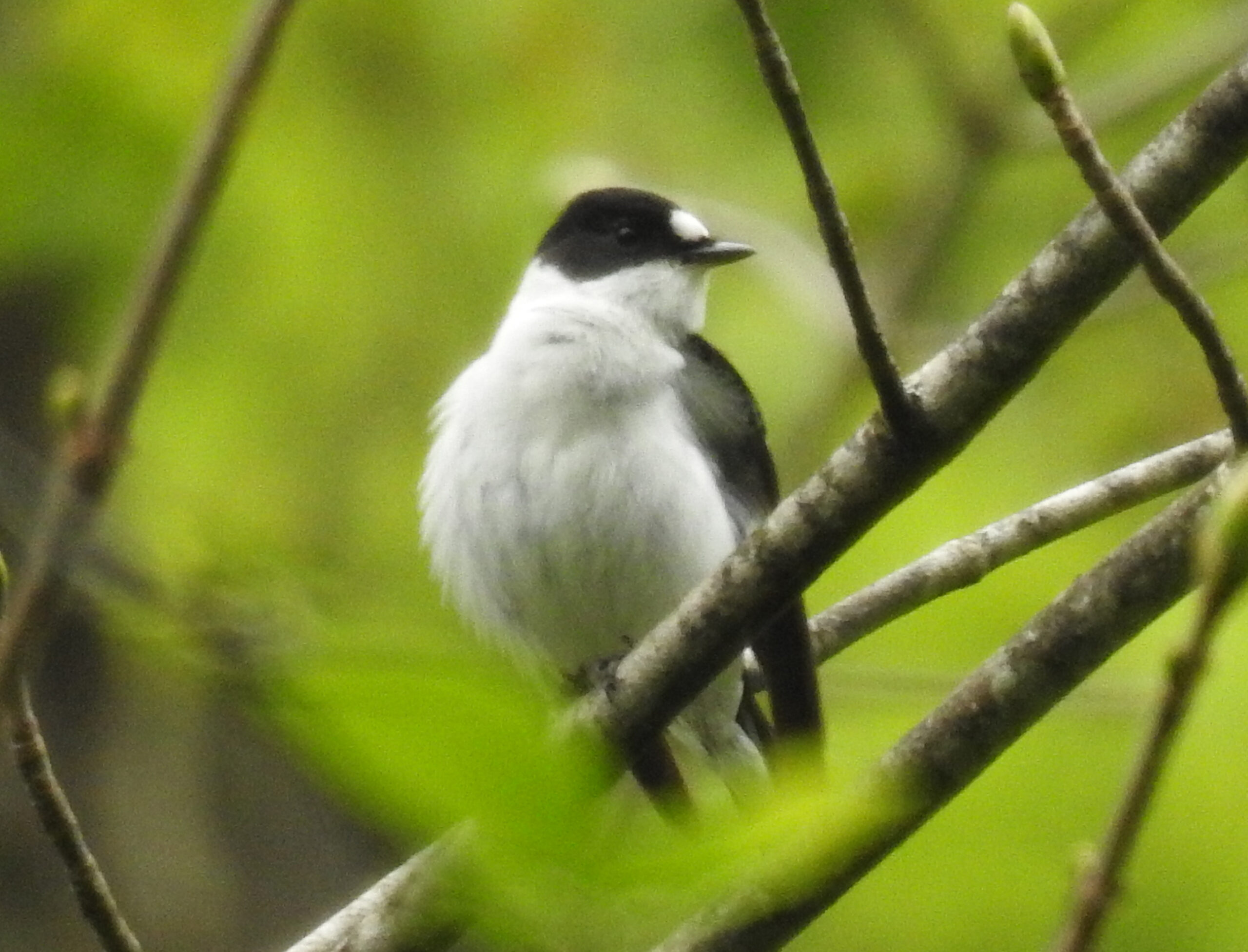
The Collared Flycatcher is found in Switzerland exclusively in Ticino and Graubünden, where it reaches the western limit of its range. In the mid-1990s, the population was estimated at 20–25 pairs, nesting primarily in chestnut forests at elevations between 500 and 1,000 meters above sea level. Currently, the species appears to be in sharp decline in Ticino and also in northern Italy. In 2004, a pilot study conducted by Ficedula to update the species’ distribution confirmed its further decline within the canton. Some pairs have established themselves in a new habitat type: floodplain forests.
The causes of the species’ decline are currently unknown. In addition to large-scale population dynamics, the lack of mature trees with cavities suitable for nesting and the degradation of chestnut groves appear to be the main threats. However, management measures for chestnut groves—and for forests in general—that could benefit the Collared Flycatcher are currently unknown. The conservation of chestnut groves, starting with the areas where the Collared Flycatcher is present, is therefore the first essential step toward its conservation.
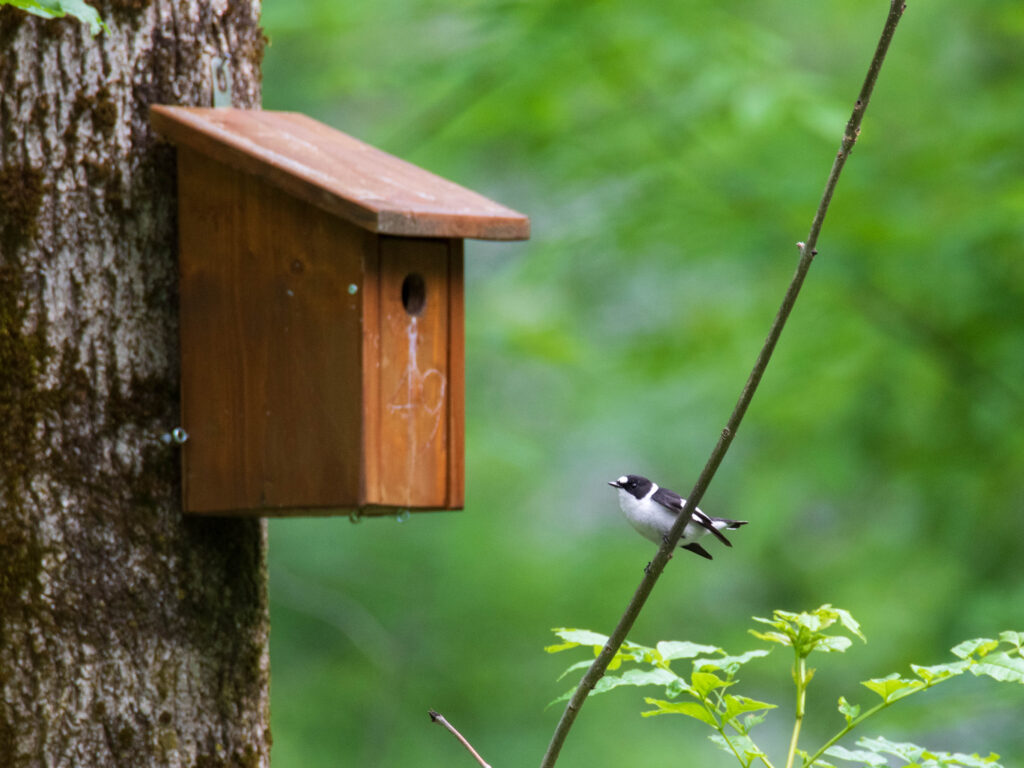
Due to the sharp decline in the species’ population, the Ficedula Association has decided to support its survival by increasing the availability of suitable nesting sites through the installation of nest boxes.
In Ticino, starting in 2004, approximately 400 nest boxes were installed, of which about 40 were placed in Val d’Ambra and the rest in the species’ traditional nesting areas, mainly in the chestnut groves of Malcantone.