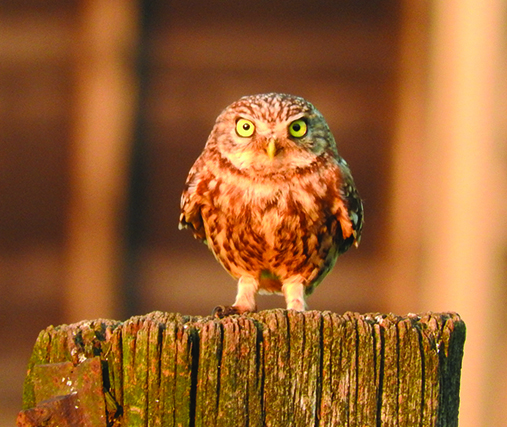
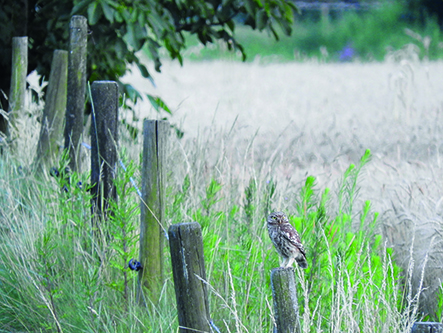
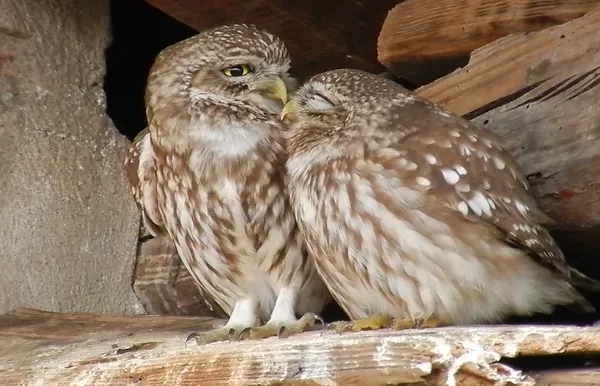
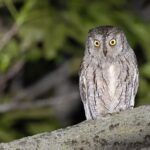
Ficedula has been studying and conserving the Eurasian Scops Owl since the 1980s. Unlike in areas north of the Alps, here the species nests exclusively in the cavities of old farmhouses and not in tree hollows. Project leaders are studying the owl’s diet, hunting territories, and the types of cavities it occupies in order to improve the protection of this small nocturnal bird of prey.
In 2005, the Eurasian Scops Owl had practically disappeared from Ticino. In fact, only four pairs remained, confined to the Magadino Plain. We absolutely had to do something to save this species! In 2008, Ficedula and BirdLife Switzerland launched a major conservation project. Since the project began, the little owl population has grown to 9 breeding pairs in 2010, 17 in 2013, and finally 18 pairs in 2019. This increase is undoubtedly the result of the measures taken to support this species and, in particular, the fact that—after many years—nest boxes suitable for Ticino little owls were finally studied and installed. These nest boxes differ from those used in other regions of Switzerland and Central Europe, which had never been used by Ticino little owls.
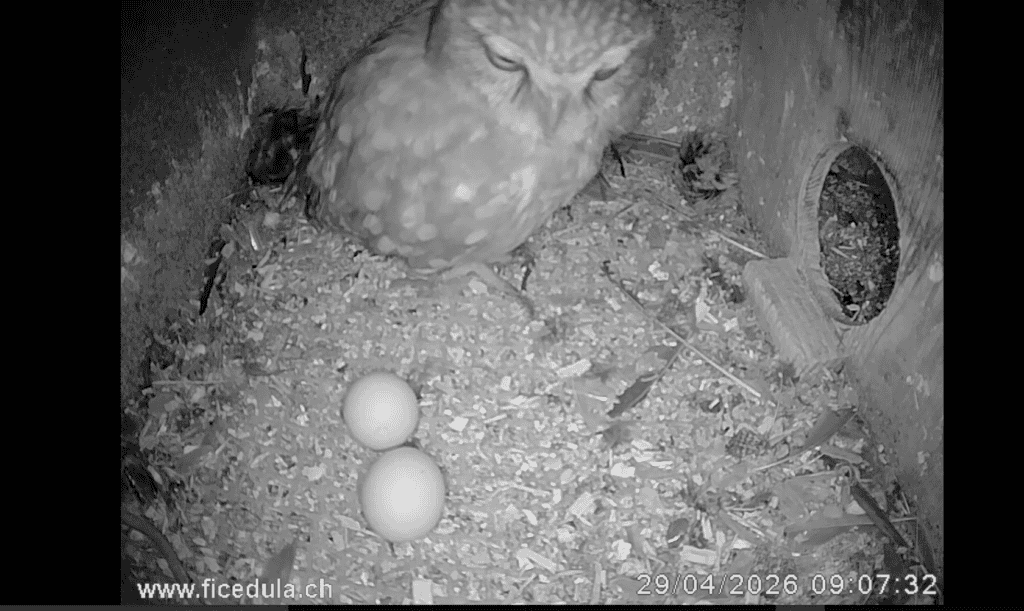
The new type of nest box was tested for the first time in 2010 and immediately accepted. In 2012, the first record of fully fledged chicks (36) was set, and in 2019, the record for nesting pairs (18!) was set. Since 2013, for the first time in 15 years, the Eurasian Scops Owl has resumed nesting outside the Magadino Plain; this development has very important implications for the future of the species.
In 2025, at least 20 pairs nested in Ticino.
In recent years, the project has also enabled the preservation of two farmhouses used by the little owl, the protection of five semi-natural nests, and the installation of one hundred poles to help the little owl hunt its prey. Other important measures include the planting of tall trees and raising awareness among farmers about the conservation of this species and, more generally, of birdlife associated with traditional agricultural areas.
At the same time, research into the species’ ecology was expanded through a study of the home ranges of two pairs and the analysis of pellets, with the aim of developing an effective conservation model to maintain and increase the little owl population. To this end, camera traps, GPS, and, more recently, webcams were used.
In 2025, Ficedula and BirdLife Switzerland developed the Action Plan for the Little Owl in Ticino, commissioned by the Office for Nature and Landscape, Department of Territorial Planning, Bellinzona. Ticino is the first canton to have a document of this kind for the conservation of this species.