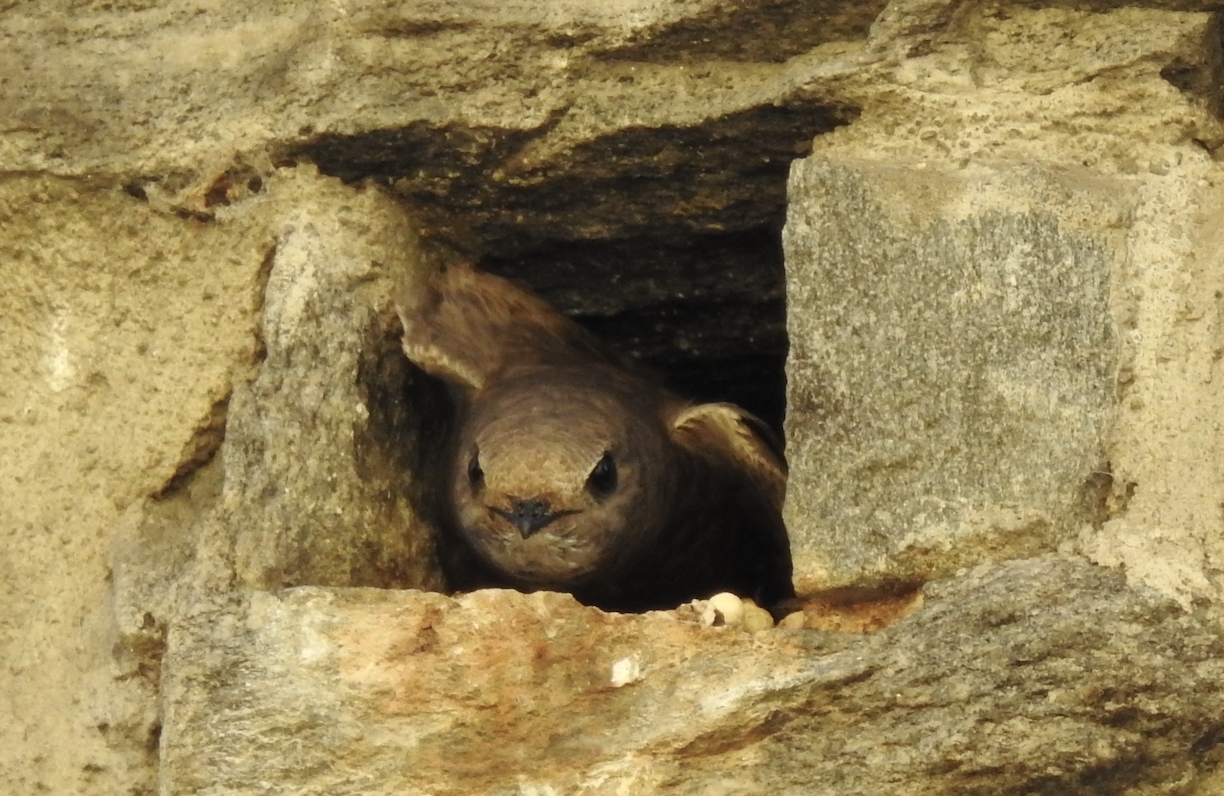
The Pale Swift is very similar to the Common Swift; the main distinguishing feature is its song. Like all swifts, it spends most of its life in flight. It feeds on insects. The Pale Swift is a trans-Saharan migrant that nests in crevices in buildings and cliffs during the summer. It prefers warm, dry habitats, such as urban and coastal areas. It may have two broods: the first in May and the second in late summer. In both broods, it lays 2–3 eggs.
The Situation in Italian-Speaking Switzerland
The Pallid Swift is a species found throughout the Mediterranean region. In Ticino, it currently nests exclusively in Locarno, in the Church of St. Anthony. The number of nesting pairs ranges from 11 to 36, depending on the year, with the highest number recorded in 2013.The presence of the species, first discovered in 1987, has been threatened on several occasions due to renovation work on the church. In 1988, an intervention by the Office for Nature and Landscape, in collaboration with Ficedula, ensured its preservation, although the colony is not yet officially protected. In recent years, some individual Hooded Crows and Jackdaws have learned to prey on Pale Swifts—both adults and chicks—posing a threat to the species’ conservation.